How Homeowners Benefit From Seamless Gutter Installation Hackettstown

A gutter system does a quiet job until it stops doing it well. Then the signs show up fast: dark streaks on siding, mulch washed out of beds, damp basement corners, and that familiar waterfall pouring over the front entry during a hard rain. For homeowners in Hackettstown, those problems are not cosmetic annoyances. They are warnings that roof runoff is not being controlled the way it should be.
That is where seamless gutters earn their reputation. When people talk about Gutter Installation Hackettstown, they are often thinking first about appearance, and that matters. A clean, well-fitted gutter line sharpens the roofline and makes the house look cared for. But the larger benefit is performance. Seamless gutters reduce weak points, manage water more reliably, and protect the parts of a home that are expensive to repair once moisture gets in.
In a place like Hackettstown, where homes see spring storms, summer downpours, falling leaves, winter freeze-thaw cycles, and the occasional heavy snow season, gutter design is not a minor detail. It is part of the house’s drainage system, and drainage decides a lot about how well a home ages.
Why seamless gutters matter more than many homeowners realize
Traditional sectional gutters are assembled from shorter pieces joined together along the run. Every joint is a potential failure point. Sealants dry out, fasteners loosen, debris catches at seams, and over time those spots begin to leak or sag. A leak does not have to be dramatic to cause damage. A slow drip falling in the same place month after month can stain brick, soften fascia boards, erode soil, and encourage mildew.
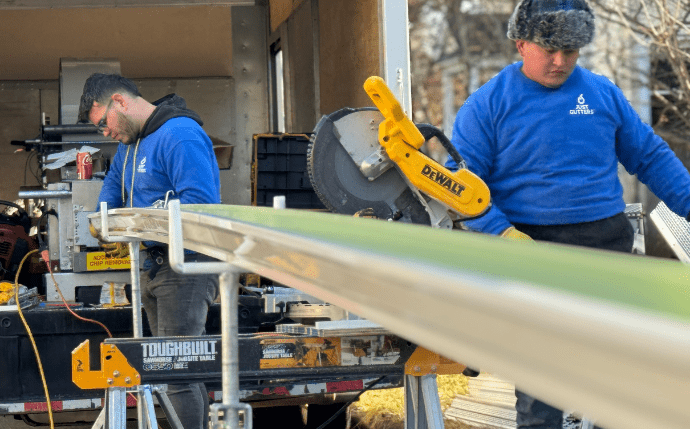
Seamless gutters solve that problem in a practical way. The gutter is formed on site from a continuous coil of metal, cut to the exact length needed for each section of the house. Joints still exist at corners and downspout outlets, because they have to, but the long horizontal runs are free of seams. Fewer seams mean fewer places for water to escape and fewer places for leaves and grit to snag.
That sounds simple, and it is, but the difference in day-to-day performance is significant. Homeowners notice it during the first strong rain after installation. Water flows where it should. The overflow at the problem corner disappears. The splashback against siding lessens. The soil below the eaves stays put instead of carving little trenches through flower beds.
The Hackettstown climate puts gutter systems to the test
A gutter system in a mild, dry climate can limp along for years even if the installation is mediocre. That is not usually the case in northwestern New Jersey. Hackettstown properties often deal with a mix of weather that exposes every weakness in gutter pitch, fastening, and sizing.
A spring storm may dump enough rain in an hour to overwhelm undersized gutters. Summer can bring sudden heavy downpours that test downspout placement. Autumn fills troughs with leaves, seed pods, and twigs. Winter adds another layer of stress when trapped water freezes, expands, and pushes at seams and brackets. Even a well-built house can develop drainage problems if the gutter system is not matched to the roof area and local weather patterns.
This is one reason professional Gutter Installation is worth taking seriously. A proper install is not just a matter of attaching metal to the fascia. The installer has to consider roof geometry, pitch, valley concentration, likely debris load, downspout capacity, and how water exits once it reaches the ground. On homes with steep roofs or large front-facing gables, runoff can be surprisingly intense. A system that looks fine from the curb may be undersized once the rain starts.
Better protection for foundations and basements
Ask any contractor where unmanaged roof water likes to cause trouble, and you will hear the same answer: at the foundation. When gutters leak, clog, or dump too much water too close to the house, the soil around the foundation gets saturated. Over time, that moisture can find its way into basement walls, crawlspaces, and slab edges.
Homeowners sometimes assume a damp basement is only a grading problem or only a waterproofing issue. Often, gutters are part of the story. I have seen homes where one undersized downspout on a rear corner kept a section of foundation wet for years. The owner focused on interior dehumidifiers and paint, but the real fix started outside with drainage.
Seamless gutters help by moving water efficiently to the downspouts, and a correctly designed system sends that runoff far enough away from the house that it does not simply circle back to the foundation. This matters even more on lots with heavy soils, shallow slope, or older landscaping that has settled over time. If the ground does not drain quickly, every gallon you keep away from the foundation counts.
For homes with finished basements, the value is even clearer. Drywall, flooring, trim, stored belongings, and electrical systems all sit in the path of moisture once seepage begins. Spending on quality Gutter Installation Hackettstown often prevents a far larger bill later.
Siding, trim, and masonry last longer
Water rarely damages only one thing. When a gutter leaks at a seam or overflows because it is clogged, that runoff tends to spread its effects across several building materials at once.
Wood trim and fascia are especially vulnerable. They stay damp, paint peels, and eventually rot sets in. On vinyl siding, repeated overflow can leave stains and encourage algae growth. On brick or stone, water can create efflorescence, those chalky white mineral deposits that signal persistent moisture movement. Mortar joints can also take a beating in freeze-thaw weather if too much water is repeatedly splashing against them.
Seamless gutters reduce those issues by reducing random leaks along the runs. That creates a more predictable drainage path. The house dries more evenly, trim paint lasts longer, and the exterior keeps a cleaner appearance between washings or repainting cycles.
The visual difference is not trivial. Homeowners usually notice exterior wear first where gutters fail. A crisp roofline paired with streaked siding and peeling fascia makes a house look older than it is. A properly fitted seamless system does not just protect materials, it helps preserve the cared-for look that supports home value.
A better fit for the house, both visually and structurally
One of the biggest advantages of seamless gutters is how tailored they are. Because the sections are formed to the exact measurements of the home, the finished result tends to look cleaner than pieced-together sectional systems. Corners align better, runs sit straighter, and there are fewer visible interruptions.
This custom fit also improves structural stability. Long runs with fewer joints distribute stress differently. With the right hangers and spacing, the system resists sagging better than an older style with multiple connection points working loose over time. That matters on homes that get snow load along the eaves or deal with repeated leaf buildup before cleanings.
Color matching is another practical benefit. Most homeowners do not want gutters to stand out. They want them to disappear into the fascia or trim line. Seamless aluminum systems often come in enough color options to blend well with common siding, trim, and roof combinations found around Hackettstown neighborhoods, from older colonials to ranch homes to newer builds. Copper is another option for a distinct look, though it carries a much higher upfront cost and suits certain homes more naturally than others.
Lower maintenance, though not no maintenance
It is important to be honest about this point. Seamless gutters are lower maintenance, not maintenance-free. Leaves still fall. Roof grit still washes down. Downspouts can still clog. Hangers still deserve inspection. But because the long runs lack seams, there are fewer places for debris to collect and fewer sealed joints to monitor for leaks.
That changes the homeowner’s maintenance experience in a real way. Cleaning tends to go faster. Water tests after storms are more reassuring. The annual inspection often turns up less trouble. Instead of tracking down several small leaks along a front run, you are usually checking corners, outlets, and the condition of the downspout discharge area.
For properties with overhanging trees, gutter guards may be worth discussing during the installation process, but they are not a perfect solution for every house. Some guards help with large leaf debris yet still allow shingle granules and fine sediment to collect. Others reduce cleaning frequency but complicate thorough inspection. The right choice depends on the kind of trees near the house, the roof pitch, and how accessible the eaves are.
Proper sizing and layout matter as much as the word "seamless"
Homeowners often hear "seamless" and assume that alone guarantees performance. It does not. A seamless system that is undersized or poorly pitched can still overflow badly. Good results come from the whole design.
A few practical factors shape whether a Gutter Installation performs well:
| Factor | Why it matters | | | | | Gutter size | Larger roof areas and steep pitches may require 6-inch gutters instead of 5-inch to handle peak runoff. | | Downspout count | Too few downspouts can bottleneck the whole system, even when the trough itself is in good condition. | | Pitch | Gutters need enough slope to drain, but not so much that the angle looks obvious from the ground. | | Hanger spacing | Adequate support helps prevent sagging, especially where snow, ice, or debris loads are common. | | Discharge location | Water needs to exit away from the foundation, walkways, and low spots where pooling begins. |
This is where experienced local judgment makes a difference. A house with two similar elevations may still need different solutions on each side because one side receives runoff from a roof valley, while the other sits under heavy trees. On paper they look comparable. In the field, they behave very differently in rain.
The cost question homeowners always ask
The first number most homeowners want is the installation price, and that is reasonable. Seamless gutters usually cost more upfront than sectional systems, especially when you add oversized gutters, premium finishes, leaf protection, or multiple downspout extensions. But the better question is what the homeowner gets for that extra spend over the next several years.
With sectional gutters, the lower purchase price can be offset by more frequent leak repairs, faster cosmetic wear, and earlier replacement if the system begins to separate or sag. Seamless systems often cost more on day one and less in headaches later. That does not mean every house needs the highest-end option available. It means the decision should include maintenance time, repair risk, and the value of preventing water damage that never makes it onto a receipt because the better system stopped it from happening.
For many homeowners in Hackettstown, the sweet spot is prefinished aluminum. It is lighter than steel, resists rust, offers a clean appearance, and fits a wide range of budgets. Copper has undeniable character and longevity, but it is usually chosen for architectural reasons as much as practical ones. Steel can be appropriate in some cases, though weight and corrosion concerns have to be considered carefully.
Where seamless gutters make the biggest difference
Not every house suffers equally from poor drainage. Some homes can tolerate a mediocre gutter setup longer than others. Still, certain conditions make the benefits of seamless gutters especially clear.
Homes with large roof planes or steep pitches shed water fast, which amplifies the consequences of any weak point. Properties with mature trees deal with heavier debris loads and more frequent clogging, so reducing snag points matters. Older homes with wood trim or aging fascia are more vulnerable to hidden water damage. Homes with finished basements or drainage-sensitive foundations simply have more at stake if runoff is mismanaged.
There is also the human factor. Some homeowners are comfortable climbing ladders and checking gutters regularly. Others are not, and many should not be, especially on high or awkward rooflines. A system that reduces service needs and behaves more predictably during storms has real value when you are trying to avoid risky maintenance.
Installation quality shows up in the details
Two gutter systems can look similar from the driveway and perform very differently in the next storm. The difference usually comes down to installation details.
The fascia needs to be sound enough to support the new system. If wood behind the old gutters is soft or deteriorated, fastening new seamless gutters over it is a short-term fix at best. The installer should also account for roof valleys that dump concentrated water, for splash areas near entries and patios, and for the path water takes once it reaches grade. I have seen otherwise decent gutter jobs undermine themselves because the downspouts emptied right beside a front walk, creating winter icing and summer washout.
Corners deserve special attention too. Corners are where movement, debris, and water pressure often combine. Cleanly fabricated corner connections and solid support go a long way toward preventing leaks later. The same is true for outlet placement. A downspout located a few feet off from the ideal point can leave a long section carrying more water than it should during a cloudburst.
This is why homeowners comparing quotes should look beyond total price. Ask what size gutters are recommended and why. Ask how many downspouts are planned. Ask whether problem areas from the old system are being specifically addressed or simply replaced in kind. The cheapest quote can turn expensive if it ignores the reasons the previous gutters failed.
Seasonal benefits homeowners notice right away
Some benefits of seamless gutters are long-term and structural. Others are immediate and easy to appreciate.
In spring, homeowners often notice less erosion in planting beds and fewer muddy splashes on lower siding. During summer storms, there is less sheeting over the gutter edge and fewer soaked spots near doors and porches. In fall, cleanup tends to be simpler because leaves do not catch at frequent seams. In winter, while no gutter can eliminate every cold-weather issue, a correctly pitched and well-supported seamless system is generally less prone to the seam failures that worsen during freeze-thaw cycles.
There is also a quieter benefit: peace of mind during rain. A reliable gutter system reduces the need to wonder whether the back corner is overflowing again, whether the basement wall will be damp tomorrow, or whether the front bed will be washed out https://www.google.com/maps?cid=3999183471512401406 by morning. Home systems that work as intended free people from having to think about them constantly.
When replacement makes more sense than another repair
Many homeowners try to extend the life of existing gutters with patching, resealing, and rehanging. Sometimes that is the right move. A minor issue on an otherwise solid system may be worth fixing. But there is a point where repairs become repetitive and stop making financial sense.
If the gutters leak at multiple seams, pull away from the fascia, overflow despite cleaning, or show widespread corrosion or deformation, replacement is usually the smarter path. The same is true when you are already repairing fascia boards, repainting trim, or addressing basement moisture. Once scaffolding or ladder work is already part of the project, it often makes sense to solve the drainage issue properly rather than preserve a failing system.
Homeowners who have lived with problem gutters for a while sometimes adapt to them. They avoid using one door in rain. They keep splash blocks that constantly shift. They touch up the same stained siding every year. Those are signs that the gutter system is not doing its job. A new seamless installation can feel like a small upgrade on paper and a major improvement in daily life once it is in place.
Choosing a system that suits the house
The best seamless gutter installation is the one that fits the house, the site, and the homeowner’s tolerance for maintenance. Bigger is not always better, and premium materials are not always necessary. What matters is a thoughtful match between roof runoff, architectural style, and drainage needs on the ground.
A modest ranch in Hackettstown with simple roof lines may perform beautifully with standard seamless aluminum and well-placed downspouts. A larger colonial with multiple valleys and a finished basement may justify oversized gutters and more aggressive drainage planning. A historic-looking home may benefit aesthetically from half-round profiles or copper, but only if the budget supports it and the architecture suits the choice.
Good Gutter Installation Hackettstown is rarely flashy. It is measured, customized, and attentive to details people usually notice only after a storm. When done well, it protects the foundation, preserves exterior materials, reduces maintenance, and helps the whole property handle weather more gracefully. For homeowners, that translates into fewer repairs, a cleaner appearance, and a home that is simply easier to own.
Just Gutters LLC
Address: 262 Main St, Hackettstown, NJ 07840
Phone number: +12013319454
FAQ About Gutter Installation Hackettstown
Can I install a gutter myself?
Yes, you can install gutters yourself. DIYers typically use aluminum or vinyl sections from home improvement stores. The project requires basic tools, precise measuring, and comfort working on ladders. Key steps include snapping a chalk line for a slight slope (1/4 inch per 10 feet toward downspouts), securing hangers every 2 feet, and caulking all joints securely.
How much does body contouring usually cost?
The Home Depot typically charges between $1,000 and $3,600 for a standard professional gutter installation on a typical single-family home with 200 linear feet of gutters. Calculated on a per-foot basis, the cost usually ranges from $5 to $18 per linear foot, highly dependent on the material you select.
How much does a 40 ft seamless gutter cost?
A 40 ft seamless gutter run will cost between $240 and $1,120+ fully installed, depending on the material you choose. Because seamless gutters require specialized on-site fabrication machines, they are rarely sold as DIY kits and are priced per linear foot.